


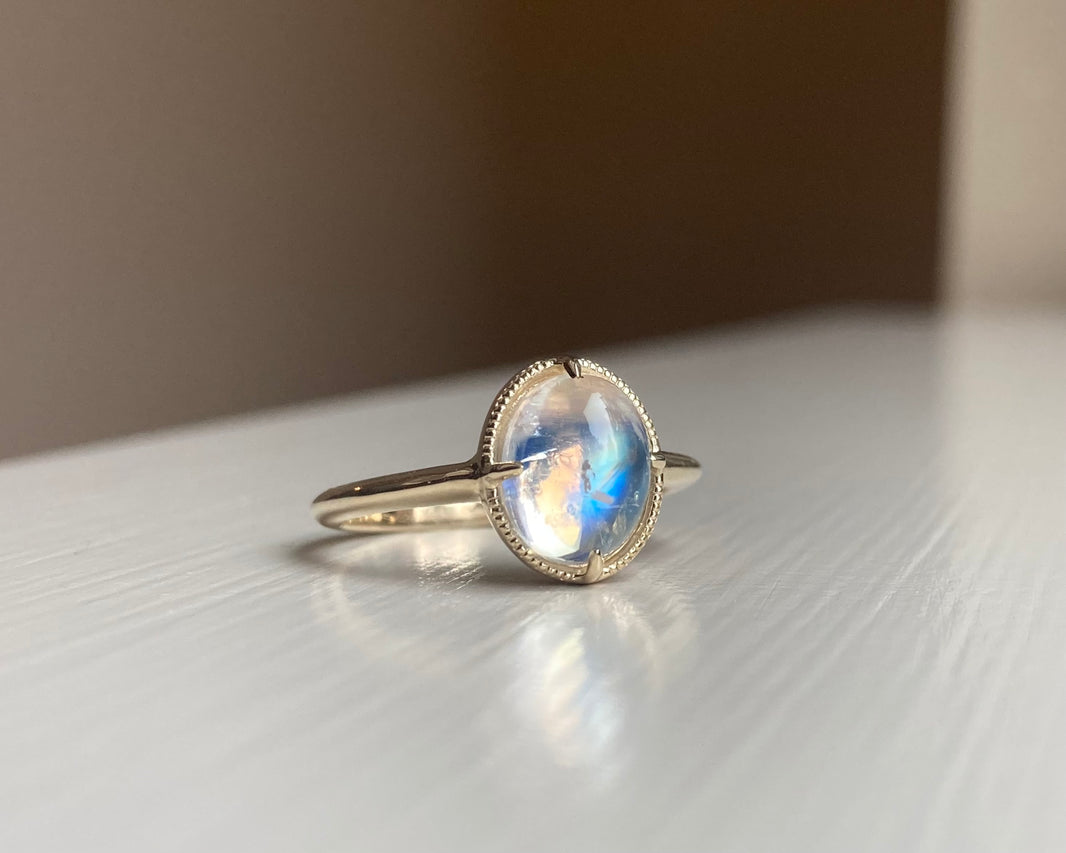
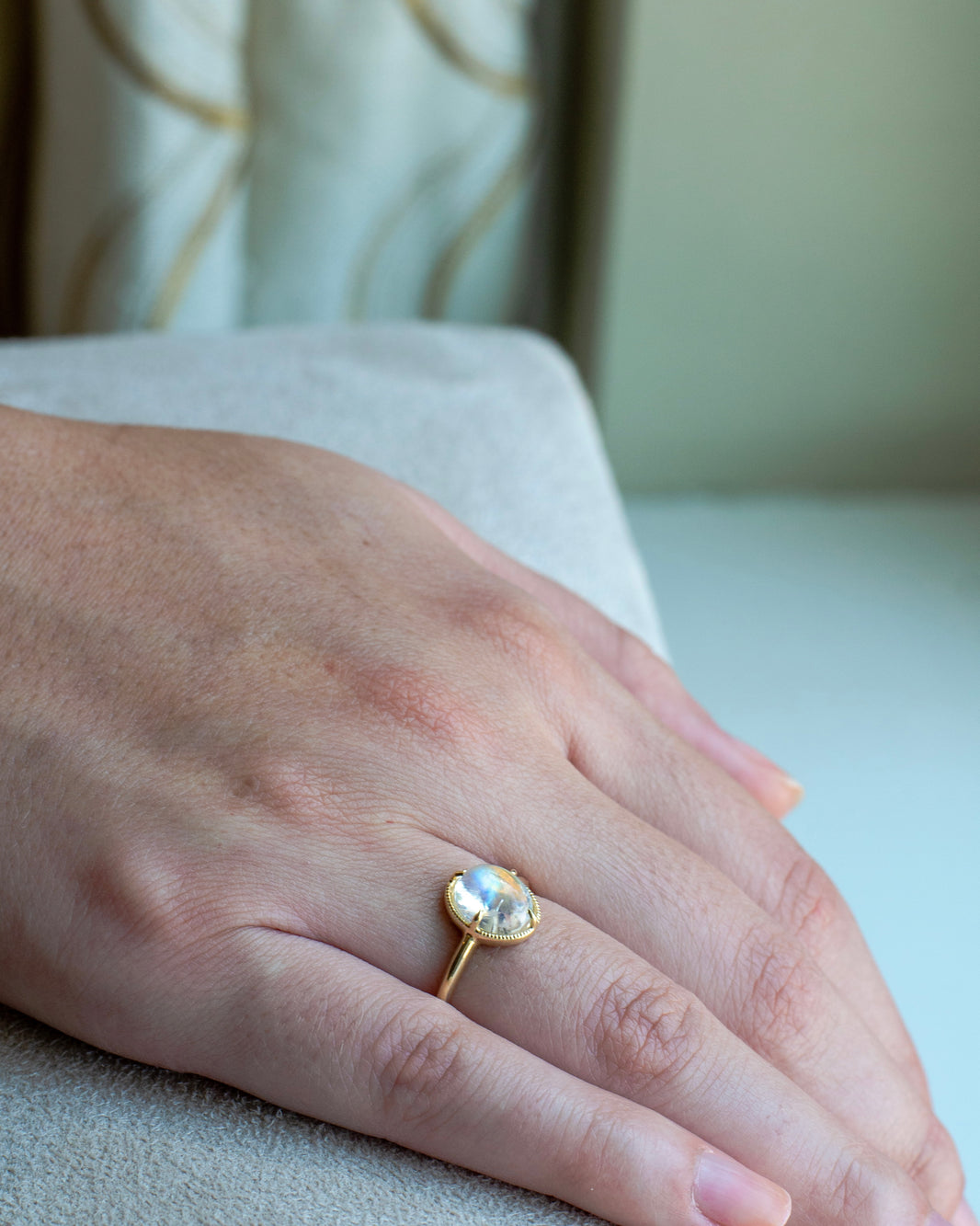


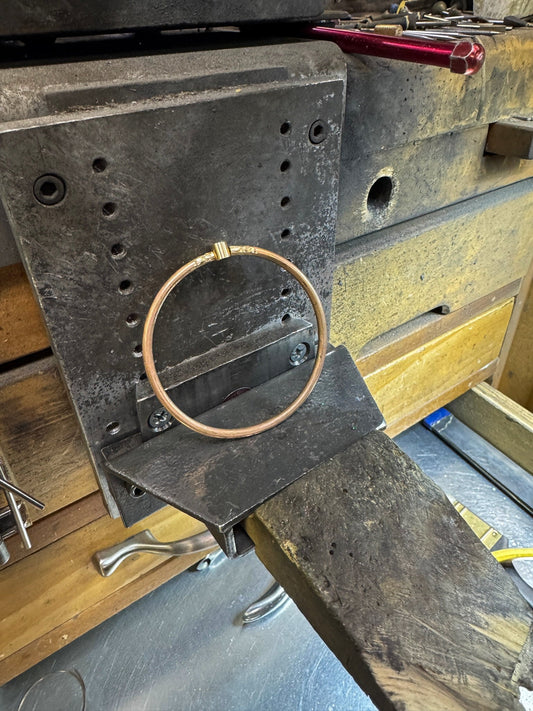


The wearing of jewelry and ornamentation emerged alongside the birth of language. Around 100,000 years ago, early humans began speaking in symbols and sounds in addition to adorning their bodies with objects. This impulse stemmed from our instinct for survival. And ancient humans, naturally, looked to great predators for inspiration. These creatures had sharp teeth and powerful claws, and while we could not grow them, perhaps wearing them could confer strength. In this early form, jewelry functioned as a protective amulet and an internal language. A message to ourselves that we would be safe.
Jewelry has also historically functioned as a social language. It’s been worn to show status and belonging with a tribe, a family, or even a graduating class. Some messages are immediately legible– engagement rings signify commitment between lovers –while others require you to know the person first– a mother’s multi-stone ring with her children’s birthstones. We wear these things to communicate who we are and what’s important to us without words.
This language is not bound by geography or even time. Jewelry travels across continents and is cherished far from its place of origin. It’s passed down from generation to generation, and its meaning is still felt and understood. You do not need to share a language or culture to connect with a piece; its message is universal.
You do not need to share a language or culture to connect with a piece; its message is universal.
Because jewelry lives on the body, its power is also intimate and portable. It can be carried with us wherever we go. Its close proximity makes it uniquely suited to hold meaning + memory and as a vessel for protection and good fortune. And humanity’s enduring desire to carry a message with us, on the body and close to the heart, has made jewelry one of the oldest universal forms of communication.


